
Need assistance with our tools or job circular? Contact our editorial team or explore our FAQs for quick support.


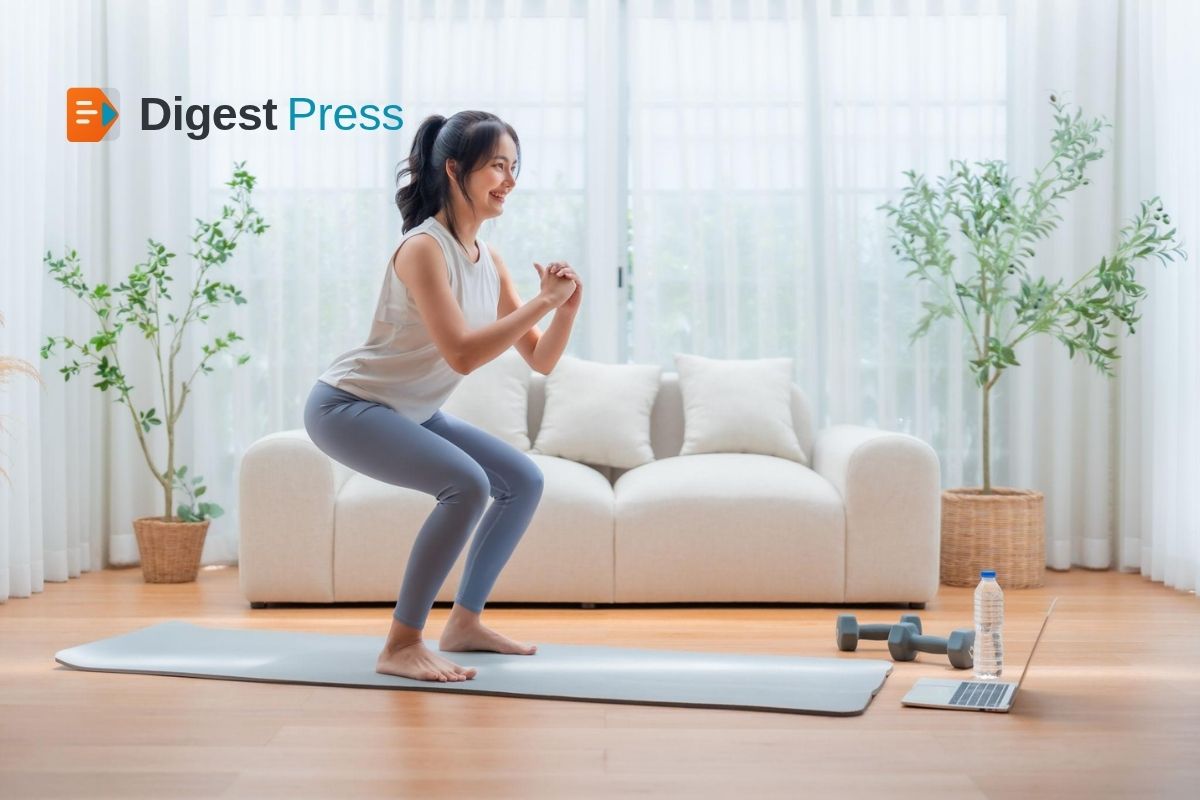
You do not need a gym membership or expensive equipment to build a regular exercise habit. With a little floor space and a consistent schedule, you can do effective daily workouts at home using bodyweight exercises, gentle cardio, and stretching.
A practical home workout routine should fit your current fitness level, available time, and recovery needs. Beginners can start with 10–15 minutes per session and gradually build up as their strength and stamina improve.
This guide includes simple exercises, a seven-day workout schedule, beginner-friendly modifications, and safety tips to help you get started.
Benefits of Working Out at Home
Home workouts can make regular physical activity easier to fit into everyday life. You can exercise before work or study, during a break, or in the evening without travelling to a gym.
Some potential benefits include:
- Improved fitness: Regular movement can improve cardiovascular fitness and everyday stamina.
- Stronger muscles: Exercises such as squats, wall push-ups, and glute bridges help strengthen different muscle groups.
- Better mobility: Gentle stretching and controlled movements can help you maintain flexibility and range of motion.
- Convenience: You can exercise in a small space with little or no equipment.
- Consistency: A short routine that fits your schedule may be easier to maintain than an ambitious plan that is difficult to follow.
Regular physical activity is also associated with benefits for physical and mental health. The World Health Organization recommends that adults aim for 150–300 minutes of moderate-intensity aerobic activity each week, alongside muscle-strengthening activities on at least two days. These are general targets, not requirements that every beginner must meet immediately.
10 Simple Daily Workouts to Do at Home
The following exercises are suitable starting points for many healthy adults. Choose the versions that match your current ability, and focus on controlled movement rather than speed.
1. Marching in Place
Time: 2 minutes
Marching in place is a simple way to warm up and increase your heart rate without needing much room.
How to do it:
- Stand upright with your feet about hip-width apart.
- Lift one knee, then the other, in a comfortable marching rhythm.
- Swing your arms naturally.
- Start slowly and increase the pace only if it feels comfortable.
Beginner modification: Keep your steps small and hold a sturdy chair for balance if needed.
2. Bodyweight Squats
Repetitions: 8–12
Squats work the muscles around your thighs, hips, and buttocks.
How to do it:
- Stand with your feet approximately shoulder-width apart.
- Push your hips back as if sitting on a chair.
- Bend your knees only as far as you can comfortably manage.
- Keep your feet planted and your chest in a comfortable position.
- Press through your feet to return to standing.
Beginner modification: Sit down on a sturdy chair and stand back up with control.
3. Wall Push-Ups
Repetitions: 8–12
Wall push-ups are a lower-intensity alternative to floor push-ups. They work the chest, shoulders, and arms.
How to do it:
- Stand facing a wall and place your palms against it at about shoulder height.
- Step back slightly while keeping your body aligned.
- Bend your elbows to bring your chest toward the wall.
- Push gently through your hands to return to the starting position.
Keep your movements smooth and avoid locking your elbows forcefully.
4. Glute Bridges
Repetitions: 10–12
Glute bridges strengthen the buttocks and engage muscles around the hips.
How to do it:
- Lie on your back on a comfortable exercise mat.
- Bend your knees and place your feet flat on the floor.
- Keep your arms beside your body.
- Tighten your buttocks and lift your hips until your torso and thighs form a comfortable line.
- Lower your hips slowly.
Avoid arching your lower back excessively.
5. Bird Dogs
Repetitions: 6–8 per side
Bird dogs train coordination and engage the muscles that help stabilize your trunk.
How to do it:
- Start on your hands and knees.
- Extend one arm forward and the opposite leg backward.
- Keep your torso steady rather than rotating your hips.
- Return to the starting position.
- Repeat on the other side.
Beginner modification: Lift only one arm or one leg at a time.
6. Standing Knee Raises
Repetitions: 10 per side
Standing knee raises engage the abdominal muscles while challenging balance.
How to do it:
- Stand tall with your feet hip-width apart.
- Lift one knee toward your waist as far as comfortable.
- Lower it slowly.
- Repeat with the opposite knee.
Keep your torso upright and avoid swinging your body to create momentum.
7. Step Jacks
Time: 30–60 seconds
Step jacks provide a lower-impact alternative to jumping jacks.
How to do it:
- Stand with your feet together.
- Step one foot out to the side while raising your arms.
- Return to the starting position.
- Repeat on the other side.
You can move at a comfortable pace without jumping.
8. Reverse Lunges
Repetitions: 6–8 per side
Reverse lunges train the legs and hips while challenging balance.
How to do it:
- Stand upright with your feet about hip-width apart.
- Step one foot backward.
- Bend both knees only as far as comfortable.
- Push through the front foot to return to standing.
- Switch sides.
Beginner modification: Hold a sturdy chair or countertop for support, or substitute chair sit-to-stands if lunges are uncomfortable.
9. Calf Raises
Repetitions: 12–15
Calf raises work the muscles at the back of the lower legs.
How to do it:
- Stand with your feet parallel.
- Hold a sturdy support if needed.
- Raise your heels and balance on the balls of your feet.
- Pause briefly.
- Lower your heels slowly.
Avoid bouncing or rushing through the movement.
10. Gentle Stretching
Time: 3–5 minutes
Finish your workout with gentle movements that help you relax and gradually return to a resting pace.
You might include:
- Shoulder rolls
- Gentle chest stretches
- Calf stretches against a wall
- Comfortable thigh stretches
- Gentle upper-back movements
Move slowly, breathe normally, and avoid forcing a stretch or bouncing into a position.
A Simple 7-Day Home Workout Schedule
You do not need to perform every exercise every day. Alternating between strength work, aerobic movement, mobility, and lighter recovery sessions helps create a more balanced routine.
The schedule below is an example for generally healthy beginners. Adjust the duration and exercises to your fitness level.
| Day | Workout | Suggested duration |
|---|---|---|
| Monday | Marching, squats, wall push-ups, glute bridges | 15–20 minutes |
| Tuesday | Brisk indoor walking or step jacks, followed by stretching | 15–20 minutes |
| Wednesday | Squats, bird dogs, calf raises, wall push-ups | 15–20 minutes |
| Thursday | Gentle mobility, stretching, and easy walking | 10–15 minutes |
| Friday | Marching, squats, glute bridges, standing knee raises | 15–20 minutes |
| Saturday | Indoor walking or a low-impact cardio routine | 20–30 minutes |
| Sunday | Rest or gentle movement, depending on how you feel | Flexible |
This schedule is a starting point, not a complete prescription for every person. The total amount of activity depends on your pace, session length, and other movement during the week.
As your fitness improves, you can gradually increase your walking time, add a few repetitions, or choose a slightly more challenging exercise variation. Do not increase every aspect of your routine at once.
A 15-Minute Daily Workout for Busy People
If you have limited time, try this short session on days when a longer workout is not practical.
Minutes 1–3: Warm-up
- March in place.
- Roll your shoulders.
- Take comfortable side steps.
Minutes 4–11: Strength and movement
Complete the following exercises at a comfortable pace:
- Bodyweight squats: 8–10 repetitions.
- Wall push-ups: 8–10 repetitions.
- Glute bridges: 10 repetitions.
- Bird dogs: 6 repetitions per side.
Rest briefly between exercises whenever needed. If eight minutes is not enough to complete the movements safely, extend the session rather than rushing.
Minutes 12–15: Cool-down
- Walk slowly in place.
- Relax your shoulders.
- Perform gentle calf and chest stretches.
This routine can help establish a habit, but a single 15-minute session does not automatically meet the full weekly activity recommendation. Add movement throughout the week as your schedule and ability allow.
How Many Repetitions Should Beginners Do?
There is no single repetition count that works for everyone. Start with a manageable amount that allows you to maintain good form.
| Exercise | Suggested beginner starting point |
|---|---|
| Marching in place | 1–2 minutes |
| Chair squats | 6–10 repetitions |
| Wall push-ups | 6–10 repetitions |
| Glute bridges | 8–10 repetitions |
| Bird dogs | 5–6 per side |
| Standing knee raises | 8 per side |
| Calf raises | 8–12 repetitions |
| Gentle stretching | 3–5 minutes |
These are suggested starting ranges, not medically prescribed targets.
If you cannot complete the repetitions comfortably, reduce the number or choose an easier variation. If the exercises become easy over time, increase the workload gradually while maintaining control.
How to Make Home Workouts More Effective
Create a Realistic Schedule
Choose a time when you are most likely to exercise consistently. A short session that you can repeat regularly is often more practical than a demanding routine that disrupts your day.
Focus on Proper Technique
Move through each exercise slowly enough to stay in control. If your posture becomes unstable or you need to swing your body to finish a repetition, reduce the difficulty.
Combine Cardio and Strength Training
Aerobic activity challenges your heart and lungs, while strength exercises work your muscles. A balanced weekly routine includes both.
For adults, the WHO recommends 150–300 minutes of moderate-intensity aerobic activity each week, or an equivalent combination of moderate and vigorous activity, plus muscle-strengthening activities on at least two days.
You can accumulate activity through indoor walking, dancing, climbing stairs when safe, active household tasks, and planned exercise sessions.
Increase Difficulty Gradually
When an exercise becomes manageable, choose one small progression:
- Add one or two repetitions.
- Extend a walking session by a few minutes.
- Perform another set after adequate rest.
- Move from wall push-ups to an appropriate lower incline only when ready.
You do not need to exercise to exhaustion to make progress.
Allow Time for Recovery
Recovery is part of a useful exercise plan. If your muscles feel unusually sore or fatigued, reduce the intensity or choose gentle movement. Avoid repeating hard workouts for the same muscle groups when you have not recovered adequately.
Make Your Space Safe
Choose a stable, non-slip surface with enough room to move your arms and legs. Keep furniture, electrical cords, and other obstacles out of your exercise area. Use only sturdy chairs or supports that will not slide or tip over.
Common Home Workout Mistakes to Avoid
Starting too intensely: Trying to complete a difficult routine on the first day can make it harder to maintain the habit. Begin with manageable sessions.
Skipping the warm-up: Start with a few minutes of gentle movement, especially before a more demanding session.
Ignoring discomfort: Muscle effort can be normal, but sharp pain, joint pain, dizziness, or unusual symptoms are reasons to stop rather than push through.
Doing the same hard routine every day: Vary your activity and allow time for recovery.
Expecting immediate results: Fitness changes generally require consistent activity over time. Results vary with starting fitness, exercise choices, recovery, nutrition, and other factors.
Focusing only on exercise duration: Movement quality, appropriate intensity, consistency, and recovery also matter.
Home Workout Safety Tips
Most healthy adults can begin with light activity and increase gradually, but the right routine depends on individual circumstances.
- Wear comfortable clothing and suitable footwear when needed.
- Keep water available and drink according to your needs.
- Breathe normally instead of holding your breath during strength exercises.
- Use supported or seated alternatives if balance is a concern.
- Stop exercising if you experience chest pain, faintness, severe shortness of breath, or other concerning symptoms. Seek urgent medical help for severe or persistent symptoms.
- If you have a chronic medical condition, a recent injury, significant joint problems, are pregnant or recently gave birth, or have been advised to restrict activity, seek individualized guidance from an appropriate healthcare professional before starting or changing your routine.
This guide offers general fitness information and is not a substitute for individualized medical advice.
Frequently Asked Questions
Can I work out at home every day?
You can include some form of movement every day, but not every session needs to be intense. Alternate strength training, aerobic activity, mobility work, and lighter recovery days according to your fitness and recovery needs.
What is the easiest workout for beginners at home?
Marching in place, chair sit-to-stands, wall push-ups, supported calf raises, and gentle stretching are useful starting options for many beginners. Choose movements that you can perform comfortably and safely.
How long should a home workout last?
Start with 10–15 minutes if you are new to exercise. Increase the duration gradually as your stamina improves. Your appropriate session length depends on the type of activity, your fitness, and your overall weekly movement.
Can I exercise without equipment?
Yes. Many exercises, including squats, wall push-ups, bird dogs, glute bridges, and marching in place, require no specialist equipment. A mat can make floor exercises more comfortable, but it is optional if you have a suitable surface.
Will daily home workouts help me lose weight?
Regular physical activity can contribute to weight management, but weight change depends on several factors, including food intake, total activity, sleep, health, and individual circumstances. No particular home workout guarantees weight loss.
Should I exercise in the morning or evening?
Choose the time that fits your routine and allows you to exercise consistently. There is no universally best time for everyone. Comfort, scheduling, and personal preference are practical considerations.
What should I do if I miss a workout?
Resume your usual routine when you can. You do not need to double the next session to compensate. Consistency over time matters more than completing every planned workout perfectly.
Start With a Routine You Can Maintain
Daily workouts at home do not need to be complicated. Begin with a few comfortable exercises, use easier variations when necessary, and gradually build a weekly routine that includes aerobic movement and strength training.
For additional guidance, consult the World Health Organization’s physical activity recommendations. These recommendations provide general activity targets; your own plan should reflect your fitness level, health, and recovery needs.